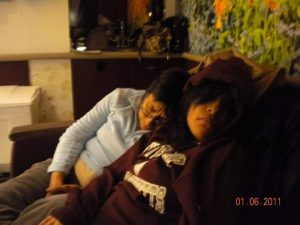
The first birth I attended was my best friend’s birth. I drove down from graduate school in Western Massachusetts at midnight in early January, picked up my mom (my birth guru) in Queens Village, and drove like a madwoman to Forest Hills, Queens, New York. I didn’t know what to expect. This was my first birth. All I knew was that:
- I had to be there for my best friend in this super important time
- I had to bring my mom, because if anyone knew about birth in my life, it was my mom — the eldest of 7 kids and the eldest grandchild. My mom had inadvertently become a birthworker for her mother in Ecuador at a really young age.
This is the beginning of my story, of how I became a birth worker/ doula/ birth keeper.
Welcome to my blog! Welcome to learning about childbirth, the perinatal period, postpartum, breast/chest feeding, babies, and of course, me!
My name is Liz and I am a Full Spectrum Doula/ birth worker/ birth keeper. For over 15 years, I have been supporting pregnant people regardless of the outcome of their pregnancy.
I’m using this space to share all of my thoughts and experiences through my birth worker journey. I have been really blessed to have supported some of the most amazing people in the world and offer them (and myself) support through childbirth and postpartum.
I didn’t know it then, but that first birth I went to on the cold January night lit a fire in me that I didn’t know existed. From that point forward, the Universe launched me into the world of reproductive justice and I have never looked back.
Reproductive Justice?! What’s that? Ha ha, to be totally transparent when I first learned the term I understood it in theory but didn’t understand the application and that’s because RJ is all around us:
SisterSong defines Reproductive Justice as the human right to maintain personal bodily autonomy, have children, not have children, and parent the children we have in safe and sustainable communities
It wasn’t until I found myself in the borderlands that I felt in my body and soul what reproductive justice meant. Taking my years of experience as a union organizer and blending it with organizing communities around fighting for funding for low-income women for basic well-women exams and mammograms hits different when the women you are fighting side-by-side look like your mom or tias. Those same women taught me so much about organizing and even about assumptions people make about Latina/o/x/e as it relates to choice and religion.
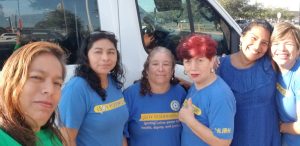
What was clear to me was that as a member of a community you choose to be a part of, your job is to show up, “en las buenas y en las malas.” You show up when a young person is graduating high school or needs help with their homework. Or when a pregnant person is nesting or experiencing severe morning sickness. You show up in the glory of welcoming a baby earthside side and you show up in loss. And community organizing campaigns are not just one and done, they are grassroots, community-centered, because the community decided the priorities based on the most immediate needs. The community fights and wins and chooses a new fight to take on; even when communities lose a fight, they regroup, build more power and strength and keep going until they win because their fights are about their lives and that of their kids.
They met daily, once partners and children were gone for the day. They broke bread, played lotería, and through all of this, they spoke about the real stuff, the hard things we don’t talk about anymore like a society. They spoke about the everyday threat of ICE raids and checkpoints, and considering that on their way to the doctor’s office they may get caught at a checkpoint and not return to their families; whether years of working as an agricultural laborer and prolonged pesticide exposure may have caused cancer; nursing babies and the challenges; violence on the Mexico side of the border; best recipes for foods, new music; which Luis Miguel and JuanGa song is the best —- a blend of beautiful conversations that made everyone feel like they were connected to this community, just as they were. Ultimately, that is the goal of reproductive justice: being able to be your whole self without fear, and to have the ability to make the best decisions for yourself with all the necessary information and without systemic barriers.
My mom’s knowledge of birthwork and postpartum support set the foundation for my work, but those years on the border organizing communities like I described above, helped to color my ethos as a birth worker — to lovingly embrace every client with dignity, love & respect.
All of the births I have had the honor of witnessing have made me a better birthworker. I’ve learned from each experience. I’ve grown from each birth. I think it’s pretty amazing to see these little babies that I met as waves in a belly, to see them earth side, and then as humans with their own personalities and stories. I cry at every birth. They’re always tears of joy — to bear witness to this pregnant person being pushed to the limit, sent to an alternative dimension, only to come out on the other side with this little baby in their arms: proof that they are the baddest bitch around — it’s the greatest gift and fills me with so much love and emotion.
My first doula baby is in middle school, boy time flies!
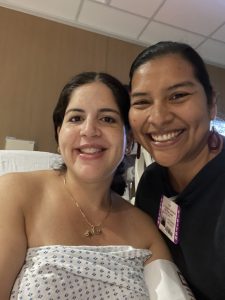 One of my favorite people in the world gave birth to her baby and I was her doula. We went from co-workers, to friends, to chosen family. It was such an honor to see her family grow over the years and being there to hold space for her and her babies.
If you haven’t had a chance yet, come and visit my website at http://www.inti-quilla.com
xo,
Liz
Leave a Reply